The Boat Buying Timeline: From Finding Your Boat to Setting Sail
A step-by-step guide to the yacht buying process, from your first search to closing day and finally heading out on your next adventure.
Buying a boat is exciting. It can also feel overwhelming.
Whether you are looking for your first cruising sailboat, upgrading to a larger yacht, or searching for a powerboat that can take your family on weekend adventures, there are several important steps between finding the right boat and actually taking the helm.
Understanding the boat buying process before you begin can make the experience much smoother. You will know what to expect, what decisions need to be made, and where professional guidance can help.
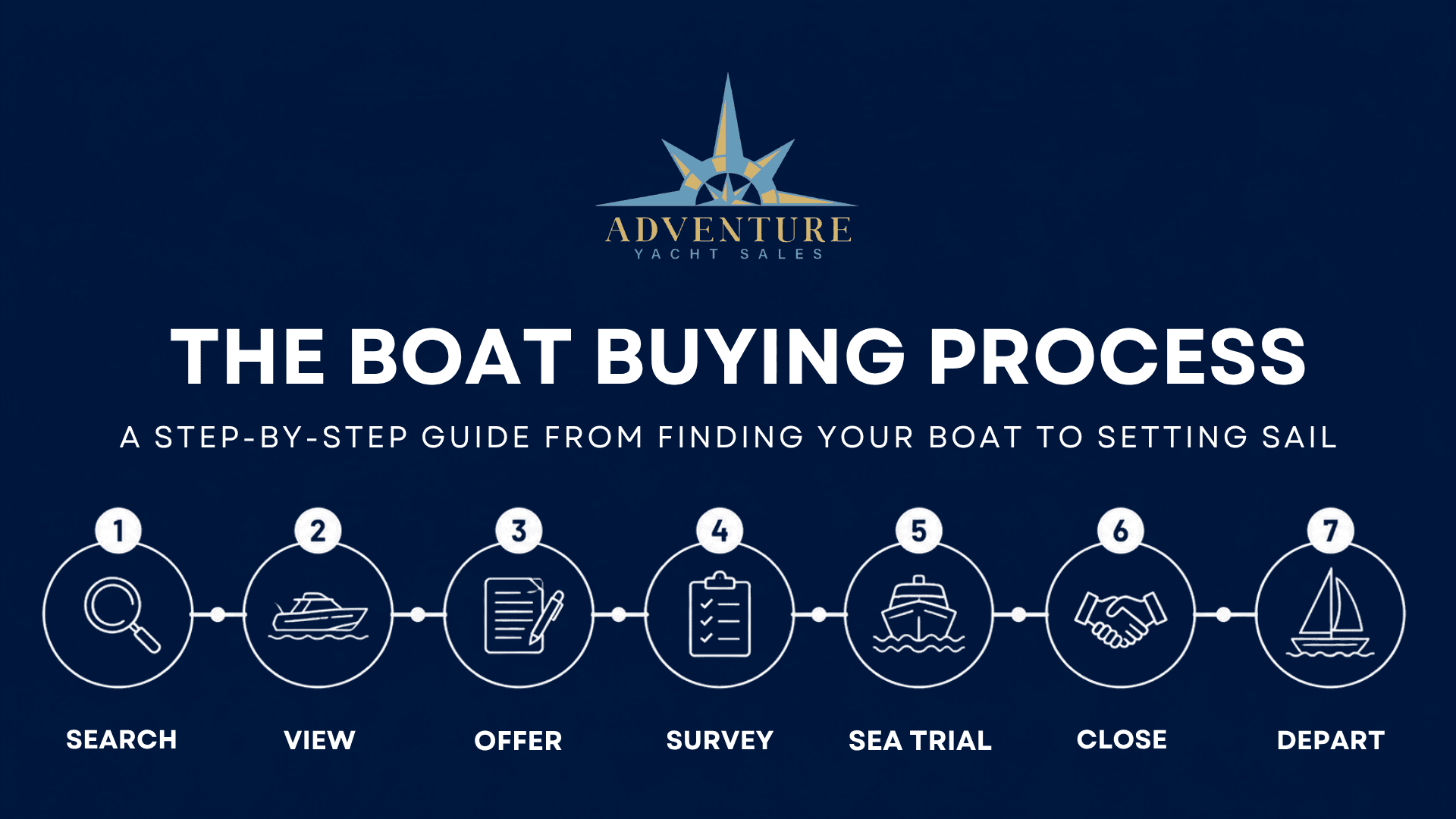
While every transaction is a little different, most boat purchases follow a similar path:
Search → Viewing → Offer → Survey → Sea Trial → Closing → Departure
Here is what each stage looks like.
1. Search: Finding the Right Boat
The boat buying process starts long before you step aboard.
The first step is figuring out what kind of boat actually fits your plans. Think about how you expect to use it, rather than simply focusing on the boat that catches your eye online.
Ask yourself:
Where do you want to cruise?
Will you be coastal cruising or heading offshore?
How many people will regularly be aboard?
Do you want to live aboard?
How much maintenance are you comfortable handling?
What is your realistic purchase budget?
What about insurance, dockage, storage, fuel, and maintenance?
Do you prefer sailing performance or interior space?
How much range do you need?
For example, a couple planning extended offshore cruising may have very different priorities than a family looking for a boat for weekend trips.
Once you understand your needs, you can begin narrowing down boat types, brands, sizes, layouts, and features.
Don't Shop Only by Price
The purchase price is only one part of boat ownership.
A less expensive boat that needs major repairs may ultimately cost more than a boat that is priced higher but has been well maintained.
When comparing boats, consider the overall condition, maintenance history, equipment, upgrades, engine hours, age, and how well the boat matches your intended use.
The goal is not simply to find the cheapest boat.
It is to find the right boat for your adventure.
2. Viewing: Step Aboard and Look Closer
Photos and online listings can help narrow your search, but they cannot replace seeing a boat in person.
Once you find a boat that interests you, schedule a viewing.
Take your time during this stage. Walk through the interior, inspect the deck, look inside lockers and compartments, examine the engine space, and pay attention to the overall condition of the boat.
If you are buying a sailboat, look closely at areas such as:
Standing and running rigging
Sails
Winches
Chainplates
Deck hardware
Keel and rudder
Steering system
For a powerboat, pay particular attention to:
Engines
Transmissions
Generator
Fuel systems
Electrical systems
Cooling systems
Propellers and shafts
You do not need to be an expert mechanic or marine surveyor. At this point, you are trying to determine whether the boat appears to be a good fit and whether you want to move forward.
Ask Questions
This is also the time to ask the seller or broker questions about the boat's history.
How has it been used?
Where has it been kept?
What major upgrades have been completed?
What maintenance has been performed recently?
Are there known issues?
A good broker can help you understand the boat's history and identify questions worth asking before you make an offer.
3. Offer: Putting the Deal in Motion
If the boat checks the right boxes, the next step is making an offer.
Your broker can help you determine an appropriate offer based on factors such as the asking price, comparable boats, condition, equipment, upgrades, and market conditions.
The offer may also include important terms and contingencies.
For example, a purchase agreement may make the sale contingent on a satisfactory marine survey and sea trial.
Don't Skip the Details
The purchase agreement is an important part of the transaction.
It outlines the terms of the purchase, including the agreed price, deposit, closing date, included equipment, and contingencies.
This is one reason having an experienced yacht broker involved can be valuable. The broker can help you understand the process and keep the transaction moving between the buyer, seller, surveyor, lender, marina, and other parties.
Once the offer is accepted and the agreement is signed, the purchase moves into due diligence.
4. Survey: Taking a Closer Look
A marine survey is one of the most important steps when buying a used boat.
A qualified marine surveyor evaluates the vessel's condition and identifies areas that may require attention.
Depending on the type of survey and vessel, the inspection may cover things such as:
Hull and structural components
Decks and fittings
Electrical systems
Plumbing
Fuel systems
Engines and machinery
Steering
Safety equipment
Rigging and sails on sailboats
The surveyor's report can give you a much clearer picture of the boat's condition.
What Happens If the Survey Finds Problems?
Finding issues does not automatically mean the deal is over.
Used boats are not expected to be perfect. In fact, it is common for a survey to identify maintenance items or repairs.
The important question is whether the findings are acceptable to you and whether they change your understanding of the boat's value or condition.
Depending on the purchase agreement, significant findings may lead to further negotiations, repairs, credits, or other solutions.
Your broker can help you navigate those conversations.
5. Sea Trial: See How the Boat Performs
A survey tells you a lot about a boat's condition while it is sitting at the dock.
A sea trial gives you the opportunity to see how the boat performs underway.
During a sea trial, you may evaluate things such as:
Engine performance
Steering
Transmission
Propulsion
Electrical systems
Navigation equipment
Autopilot
Generator
Handling under power
Sailing performance and sail handling
For a sailboat, you may also want to see how the boat handles under sail, depending on the circumstances and terms of the transaction.
The goal is not to turn the sea trial into a day on the water.
It is to confirm that the boat operates as expected and to identify potential issues that may not be obvious while the vessel is at the dock.
6. Closing: Making It Official
Once the survey and sea trial are complete and any outstanding issues have been addressed, you move toward closing.
The exact closing process varies depending on the transaction, financing, documentation, and vessel.
Before closing, make sure the required paperwork is in order. This may include documentation, registration information, bills of sale, lien information, insurance, financing documents, and other required paperwork.
Your broker can help coordinate the different pieces of the transaction so everyone knows what needs to happen before the sale is finalized.
Then comes the moment every buyer has been waiting for:
The boat is officially yours.
7. Departure: Start the Adventure
Closing day does not necessarily mean you immediately cast off the lines.
There may still be a few things to take care of.
You may need to:
Arrange insurance
Transfer registration or documentation
Move the boat
Complete repairs or maintenance
Stock provisions
Add safety equipment
Arrange dockage
Learn the systems aboard
Plan your route
Schedule a captain or delivery crew
For a first-time boat owner, this can be one of the most exciting — and overwhelming — stages.
You have gone from searching online to actually owning the boat.
Now it is time to learn how everything works and begin planning where you want to go.
Your First Trip Doesn't Have to Be Far
There is no rule that says your first trip needs to be an epic offshore passage.
Take the time to become comfortable with your new boat.
Learn the systems. Practice docking. Test the navigation equipment. Understand the engine. Learn how the boat handles in different conditions.
Then start expanding your cruising range.
The best part of buying a boat is that the purchase is really just the beginning.
How Long Does the Boat Buying Process Take?
There is no universal timeline for buying a boat.
Some transactions can move quickly, while others take weeks or longer.
Factors that can affect the timeline include:
How quickly you find the right boat
Seller and buyer availability
Surveyor availability
Sea trial scheduling
Financing
Documentation
Repairs or negotiations
Insurance requirements
Closing arrangements
The location of the boat
This is another reason it helps to have realistic expectations.
Finding the right boat is more important than rushing through the process.
Tips for a Smoother Boat Purchase
Know Your Budget
Leave room in your budget for the costs that come after the purchase. Maintenance, insurance, dockage, equipment, and upgrades can all add to the cost of ownership.
Do Your Homework
Research the boat's make, model, common maintenance concerns, performance characteristics, and resale market before making an offer.
Get a Professional Survey
A survey is an important part of understanding the condition of a used boat. Choose a qualified surveyor who is appropriate for the type of vessel you are buying.
Don't Fall in Love With the First Boat
It is easy to become emotionally attached to a boat.
But remember: there will always be another boat.
Take a step back and make sure the boat actually fits your plans.
Ask Questions
There are no bad questions when you are making a major purchase. If you do not understand something about the boat or transaction, ask.
Work With Experienced Professionals
A yacht broker can help you navigate the process from the initial search through negotiations, due diligence, closing, and beyond.
The right guidance can help you avoid unnecessary surprises and make the buying experience much more manageable.
FAQ
How long does it take to buy a boat?
There is no set timeline. The process can range from relatively quick transactions to purchases that take several weeks or longer, depending on the boat, survey, financing, negotiations, documentation, and other factors.
Do I need a marine survey when buying a used boat?
A professional marine survey is strongly recommended when purchasing a used boat. It provides an independent assessment of the vessel's condition and can identify problems that may not be obvious during a normal viewing.
Does every boat need a sea trial?
A sea trial is an important part of evaluating a boat's operation, particularly for larger or more complex vessels. The exact process depends on the purchase agreement and the vessel.
Can I negotiate the price after the survey?
Potentially. If the survey identifies significant issues, the findings may become part of further negotiations, depending on the terms of the purchase agreement.
Should I use a yacht broker when buying a boat?
You do not necessarily have to use a broker, but an experienced yacht broker can provide valuable guidance throughout the transaction, including finding suitable boats, preparing offers, coordinating surveys and sea trials, and helping manage the closing process.
What happens after I buy the boat?
Once the purchase is complete, you will need to handle items such as insurance, registration or documentation, transportation or delivery, maintenance, provisioning, and learning the boat's systems. Then the real adventure begins.
Conclusion
Buying a boat may look complicated from the outside, but the process becomes much easier when you understand the steps.
Search. View. Offer. Survey. Sea trial. Close. Depart.
Each stage has a purpose. The search helps you identify the right boat. The viewing lets you take a closer look. The offer starts the transaction. The survey and sea trial help you understand the boat's condition and performance. Closing makes the purchase official.
And then comes the best part — leaving the dock and putting your new boat to use.
The right boat is more than a purchase. It is a platform for the places you want to explore, the people you want to bring along, and the adventures waiting beyond the horizon.
Ready to start your own boat-buying journey?
Adventure Yacht Sales can help you navigate the process from the first search to the day you finally cast off. Whether you are buying your first cruising sailboat, moving up to a larger yacht, or searching for the right powerboat, our team is here to provide knowledgeable guidance and personalized service throughout the process.
Your next adventure starts with finding the right boat. Contact Adventure Yacht Sales and let's start looking.