
So You Found Your Dream Boat! Next Step: The Survey. What Buyers Need to Know
From choosing the right marine surveyor to sea trial day, here’s what boat buyers should know before their yacht survey.
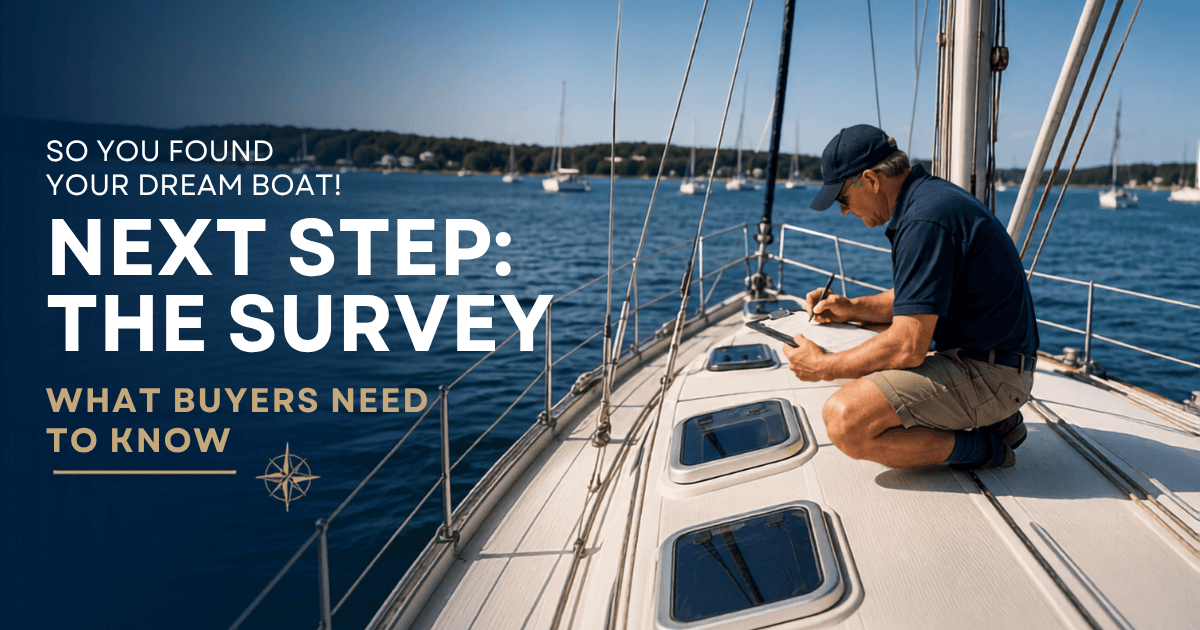
Buying a boat is exciting. You’ve found one you really like, you’ve made an offer, and now you’re getting closer to making it yours.
Then someone says, “You need to get a survey.”
For a first-time buyer, that can bring up a lot of questions. What exactly does the surveyor look at? How do you find the right surveyor? Do you need to be there? What happens if they find something wrong?
The survey is an important part of the buying process, but it doesn’t have to be intimidating. In fact, it’s one of the best opportunities you’ll have to really understand the boat before you buy it.
A good survey should give you a much clearer picture of the boat’s condition, help uncover problems you may not have noticed, and give you information you can use when deciding whether to move forward.
Here’s how we recommend approaching the process, from choosing a surveyor to the day you step aboard for the inspection.
Start With the Right Surveyor
Choosing your surveyor is probably the most important part of preparing for the survey.
Your broker may have surveyors they regularly work with, but ultimately, the surveyor is working for you, the Buyer. You should feel comfortable with the person you hire and confident that you’re getting an independent opinion.
Find Someone Who Knows Your Type of Boat
Surveyors have different areas of experience.
If you’re buying a 40-foot cruising sailboat, for example, you want someone who regularly works on sailboats and understands the things that matter on a cruising vessel. That includes the hull and deck, but also the rig, keel, steering system, electrical systems, tanks, machinery, and everything else that makes the boat work.
The same goes for powerboats. A surveyor who spends most of their time looking at large commercial vessels may not be the best fit for a recreational cruising boat.
When you’re interviewing surveyors, ask a few simple questions:
How long have you been surveying boats?
How often do you survey boats like the one I’m buying?
Do you primarily work with sailboats, powerboats, or both?
What is included in your pre-purchase survey?
Do you do an Engine/mechanical survey?
Do you do an Electrical survey/analysis?
Do you do Rigging surveys?
Do you perform sea trials?
Do you offer haul-out inspections?
Can I see a sample report?
Professional organizations such as the Society of Accredited Marine Surveyors (SAMS) is a great place to start when looking for a qualified surveyor: https://marinesurvey.org/
The important thing is to find someone with the right experience for your boat, not just someone who happens to be available.
Understand What Your Survey Includes
Before you schedule anything, talk with the surveyor about what they will actually be inspecting.
The word “survey” can mean different things depending on the surveyor and the type of inspection you're ordering.
A pre-purchase survey may include things like:
Hull and structural components
Decks and superstructure
Interior spaces
Electrical systems
Plumbing
Fuel systems
Steering
Propulsion
Safety equipment
Ground tackle
Electronics
Rigging and mast
Moisture readings
Underwater components
Some items may require additional inspections or specialists.
For example, a surveyor can inspect an engine and report on its general condition, but that doesn’t necessarily mean they are performing a full engine/mechanical diagnostic. If there are questions about the engine, you may want to schedule an engine/mechanical surveyor or employ a qualified marine mechanic to take a closer look.
The same can apply to rigging, electrical systems, or other specialized equipment.
Ask questions before the survey, not after.
You want to know exactly what you’re paying for and where the surveyor’s responsibilities end.
Scheduling a Haul-Out
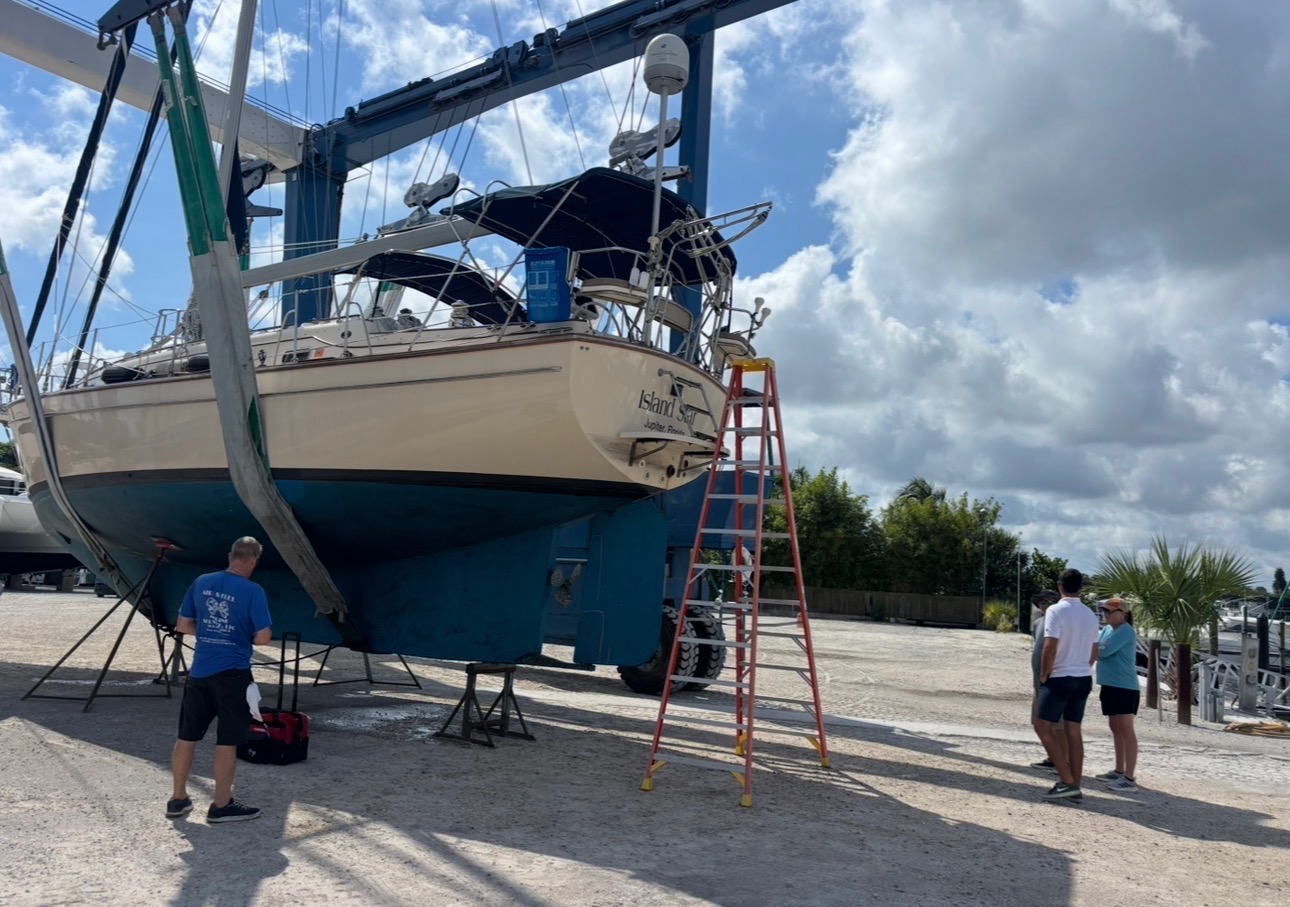
If you’re buying a boat, seeing what’s above the waterline is only part of the story.
A haul-out gives the surveyor access to the underwater portion of the boat, where they can inspect things that simply can’t be properly evaluated while the boat is floating.
Depending on the boat, this may include:
Hull bottom
Keel
Rudder
Propeller
Shaft
Through-hulls
Seacocks
Bottom paint
For a sailboat, the keel and rudder are especially important areas to inspect.
The Buyer is responsible for selecting and booking the surveyor and making arrangements for the haul-out. Your broker can often help coordinate this with the Seller and haul-out yard. The Buyer is responsible for the cost of the surveyor/s and for the short haul-out expense. The Seller is tasked with making the boat ready and available for survey in addition to captaining the vessel- or arranging for a captain -for the trial run.
Ask for the Boat's Records
If the Seller has maintenance records and other documentation available, take the time to review them.
You don’t need to become an expert in every receipt or service record. You’re simply trying to get a better understanding of the boat’s history.
Things that may be helpful include:
Previous survey reports
Engine service records
Generator service records
Maintenance receipts
Rigging inspections
Haul-out records
Records of major upgrades
Equipment manuals
Documentation for significant repairs
A boat that has been well maintained will usually have some history behind it.
And if there are gaps in that history, that’s worth knowing, too.
Make Your Own List of Questions
You’ve probably spent a lot of time looking at the boat already.
Maybe there’s something you noticed that didn’t quite look right. Maybe there’s a piece of equipment you don’t understand. Maybe you’re wondering about the age of the engine or when the rigging was last replaced.
Write those things down.
Your surveyor may find them on their own, but there’s nothing wrong with pointing out the areas you’re curious about.
For example:
“I noticed some staining around this hatch.”
“Do you see anything concerning with this deck?”
“The owner said the engine was recently serviced. Is there anything we should look at?”
“Can you take a closer look at this through-hull?”
“Does this wiring look properly installed?”
The survey is your chance to ask questions and learn about the boat.
Take advantage of it.
Sellers need to Prep the Boat for the Survey
If you’re the buyer, you may not have much control over how the boat is prepared. That’s something your broker can help coordinate with the seller.
Ideally, the boat should be reasonably accessible when the surveyor arrives.
That means they should be able to get to things like:
Engine compartments
Bilges
Electrical panels
Batteries
Tanks
Through-hulls
Lockers
Machinery spaces
Plumbing
Interior systems
The boat doesn’t need to be spotless. It just needs to be accessible.
If every locker is packed full of personal belongings and the engine room is difficult to reach, the surveyor may not be able to inspect everything as thoroughly as they otherwise could.
What Happens on Survey Day?
This is the part that can feel a little overwhelming if you’ve never been through a survey before.
The exact process will vary depending on the boat and the surveyor, but expect the inspection to take several hours.
The surveyor will generally work through the boat in a systematic way, looking at the structure, systems, equipment, and overall condition.
They’ll likely take notes and photographs along the way.
Exterior Inspection
The surveyor will inspect accessible areas such as:
Hull
Decks
Cockpit
Rails and lifelines
Hardware
Windows and hatches
Through-hulls
Keel and rudder
Propeller and shaft
They may also look for signs of moisture, damage, repairs, corrosion, or other areas that deserve a closer look.
Interior Inspection
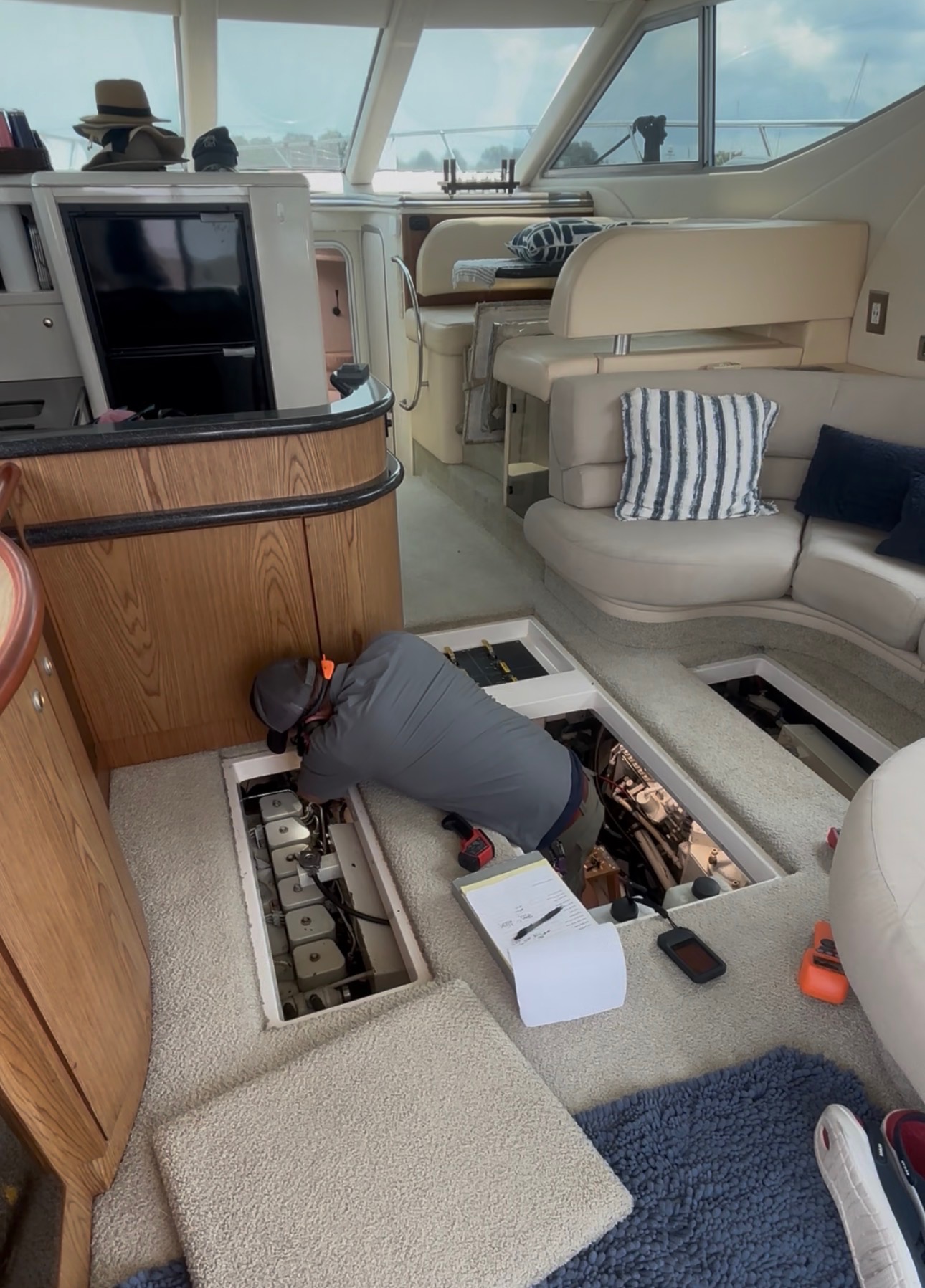
Inside the boat, they’ll work through the areas and systems that are accessible.
This can include:
Bilges
Bulkheads
Electrical systems
Batteries
Plumbing
Pumps
Tanks
Appliances
Safety equipment
Interior structure
They may use moisture meters or other tools as part of the inspection, depending on the boat and scope of the survey.
Engine/Mechanical/Electrical Systems
The surveyor will also inspect the accessible mechanical equipment.
This may include:
Main engine
Generator
Transmission
Fuel system
Cooling system
Exhaust
Steering system
Electrical Panel 110 and 12 vt
Electrical charging systems
Again, remember that a marine survey isn't the same thing as a complete engine inspection by a mechanic or an in-depth electrical assessment.
If the surveyor sees something that concerns them, they may recommend bringing in an Engine surveyor or an ABYC Electrical surveyor specialist.
That’s a good thing.
What About the Trial Run?
If a Trial Run is part of your purchase process, this is where you get to see how the boat actually performs underway.
It isn't just a chance to take the boat for a ride.
The surveyor may be paying attention to things like:
Engine performance
RPM
Temperature
Gauges
Steering
Transmission
Propulsion
Vibration
Electronics
Autopilot
Handling
For a sailboat, you may also have the opportunity to see how it performs under sail.
This can be particularly helpful if you’re buying a boat for cruising. You want to get a feel for how the boat handles, how the systems work underway, and whether anything seems unusual.
Should You Attend the Survey?
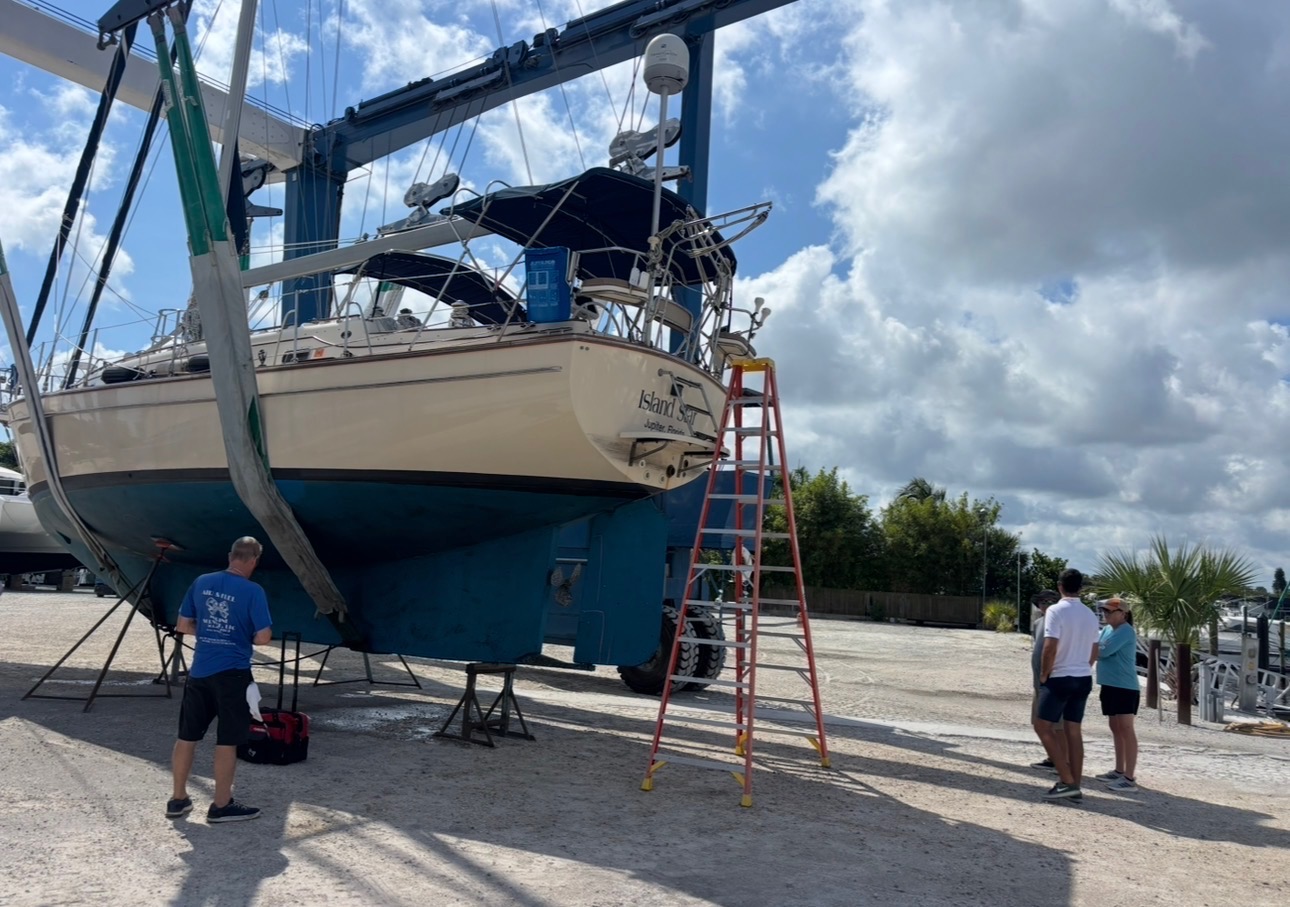
YES! If you can, we recommend it.
Not because you need to hover over the surveyor, but because there is a lot you can learn by being there.
A survey is a great opportunity to understand your potential boat before you own it.
You may learn where the important systems are, what your surveyor considers normal wear and tear, and which items deserve your attention.
Just remember that the surveyor has a job to do.
Give them space to work and save your questions for appropriate moments. Taking notes throughout the day can also be helpful.
Don't Panic When You See the Survey Report
This is probably the most important piece of advice we can give buyers:
Don't assume every item in a survey report is a deal-breaker.
Used boats have things that need attention.
There will be maintenance items. There may be cosmetic issues. Some equipment may be old. Something may need to be repaired or replaced eventually.
That's normal.
Instead of focusing on how long the list is, pay attention to what is actually important.
Look closely at findings involving:
Structural integrity
Water intrusion
Steering
Propulsion
Electrical systems
Fuel systems
Through-hulls and seacocks
Rigging
Fire and safety equipment
If the surveyor recommends further investigation, take that recommendation seriously.
Sometimes the best next step is simply bringing in a specialist to get a better answer.
What If the Survey Finds Problems?
This is where having an experienced broker can make a big difference.
A survey finding doesn't automatically mean the deal is dead.
Depending on the terms of your purchase agreement, you may have several options. You could ask the seller to address certain repairs, negotiate a price adjustment, request a credit, have a specialist inspect the issue, or decide that the boat isn't right for you.
Every situation is different.
The important thing is to look at the findings realistically.
A boat with a few maintenance items isn't necessarily a bad boat. On the other hand, a major structural or safety concern shouldn't be ignored simply because you really like the boat.
The survey gives you information.
Your job is to use that information to make a smart decision.
Think of the Survey as Part of the Learning Process
One of the biggest mistakes buyers can make is treating the survey like a pass-or-fail test.
It isn't.
You're not looking for a boat that has absolutely nothing wrong with it. Especially when you're buying a used boat, that's probably not realistic.
You're trying to understand what you're buying.
What condition is it in? What needs attention now? What can wait? What might it cost to bring the boat where you want it to be? And, most importantly, is this still the right boat for you?
Those are the questions the survey can help answer.
And sometimes, a survey will uncover something significant enough that you decide to walk away. That's not necessarily a bad outcome. Finding that out before you own the boat is exactly why the survey is there.
Boat Survey Checklist
Before the Survey
Choose an independent, qualified surveyor https://marinesurvey.org/
Find someone experienced with your type of boat
Confirm exactly what the survey includes
Discuss a haul-out
Discuss whether a sea trial is included
Arrange specialized inspections if needed
Review maintenance and service records
Make a list of your questions
Make sure the boat will be accessible
On Survey Day
Bring your questions
Take notes
Give the surveyor room to work
Pay attention to major findings
Participate in the sea trial
Ask questions when appropriate
After the Survey
Read the entire report
Identify major versus minor findings
Get specialist opinions when recommended
Review the findings with your broker
Consider potential repair and maintenance costs
Decide whether the boat still makes sense for you
FAQ
How much does a boat survey cost?
The cost depends on the boat, its size, location, and the type of survey being performed. Haul-outs, travel, sea trials, and additional inspections may add to the total. Your surveyor should provide pricing and explain what is included before you schedule.
Should I attend the boat survey?
If you’re able to, yes. You can learn a lot by being there, and it gives you an opportunity to ask questions and better understand the boat.
Does a survey include the engine?
The surveyor will generally inspect accessible mechanical systems, but the scope varies. If there are concerns about the engine, a separate inspection by a qualified marine mechanic may be worthwhile.
Does a survey include an Electrical survey?
The surveyor will generally inspect accessible electrical anbd charging systems, but the scope varies. If there are concerns about the electrical systems, a separate inspection by a qualified ABYC marine electrician/ Electrical survyeyor may be worthwhile.
Do I need to haul the boat out for a survey?
For a thorough pre-purchase inspection, an underwater inspection can be very valuable. It allows the surveyor to inspect the hull bottom, keel, rudder, propeller, shaft, through-hulls, and other components that aren't accessible while the boat is in the water.
What happens if the survey finds problems?
Don't panic. That's what the survey is for. Depending on your purchase agreement, you may be able to negotiate repairs or a price adjustment, request further inspections, or decide not to proceed with the purchase.
Is a survey necessary when buying a used boat?
While the specific requirements can vary, a professional survey is an important part of due diligence when purchasing a used boat. It can give you information about the boat's condition that you simply can't get from a walk-through or sea trial alone.
Conclusion
A boat survey can seem like one more hurdle standing between you and your new boat.
In reality, it's one of the most useful parts of the buying process.
Take your time choosing the surveyor. Make sure you understand what they're inspecting. Prepare your questions. Attend the survey if you can. And when you receive the report, don't focus on the number of items listed. Focus on understanding what they mean.
The goal isn't to find a perfect boat.
The goal is to know what you're buying.
That knowledge can help you make a better decision today—and give you a much better idea of what ownership will look like once the lines are yours.
At Adventure Yacht Sales, we know that buying a boat involves a lot more than finding a boat you love.
From choosing the right vessel to navigating the survey, sea trial, negotiations, and closing, we're here to help you understand the process and make informed decisions along the way.
Ready to start looking for your next boat? Contact Adventure Yacht Sales and let's start planning your next adventure.